
The Faculty of Sciences at the Friedrich-Alexander-Universität Erlangen-Nürnberg brings together more than 140 professorships spanning a broad spectrum of scientific disciplines. Research activities are coordinated across the six departments and individual chairs while maintaining the scientific autonomy of researchers and research groups. The faculty’s research environment thrives on interdisciplinary exchange, collaboration, and scientific excellence.
For some current research highlights please see our news section below
Current News
FAU researchers solve Ice Age mystery
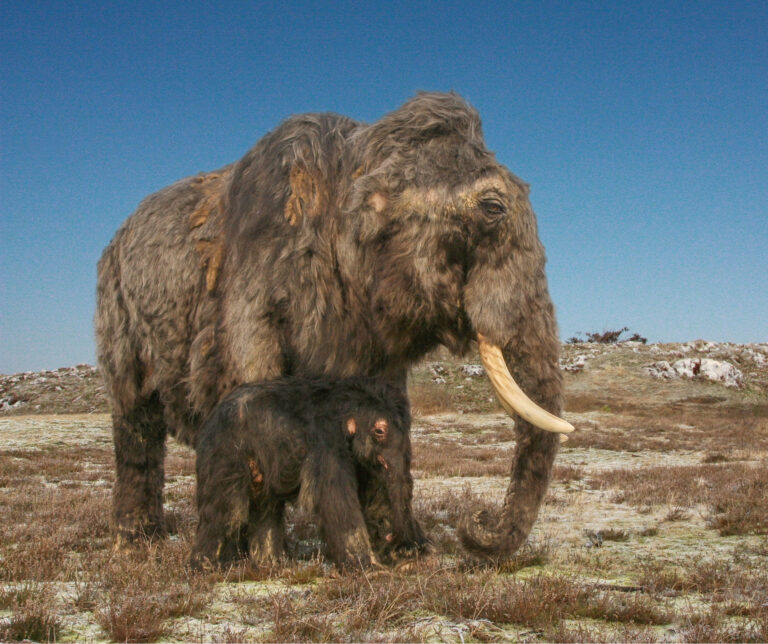 Taimering mammoth was likely butchered by hunters and gatherers New findings on the woolly mammoth from Taimering: The approximately 25,000-year-old skeleton of a woolly mammoth, discovered in 2020 near Regensburg, provides new insights into life during the last Ice Age. An interdisciplinary team, which also included researchers from Friedrich-Alexander-Universität Erlangen-Nürnberg (FAU), found that the animal […]
Mirror-Image Light Modulation via Nanoencapsulation
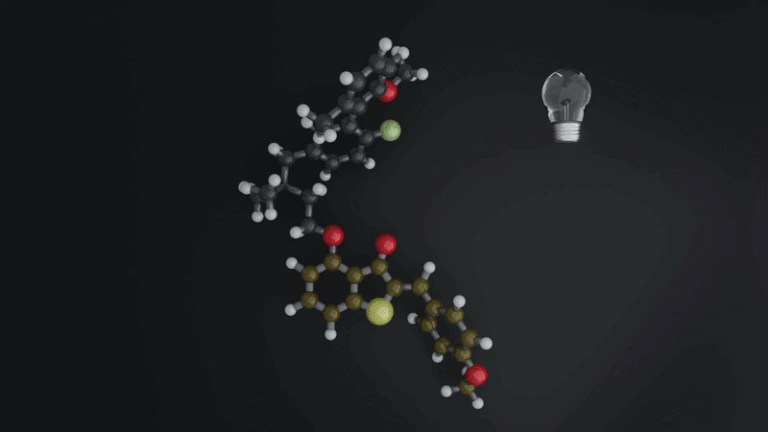 Just as our hands are mirror images of each other, light itself can also exhibit mirror-image or “chiral” behavior. The controlled modulation of such chiral light signals plays an important role in sensor technology, asymmetric synthesis, and optical signal and information processing. A novel method for controlling chiral light output signals—again via light input signals—is […]
Lipid nanoparticles restructure their membrane significantly after being absorbed into a cell and ending up in an acidic environment
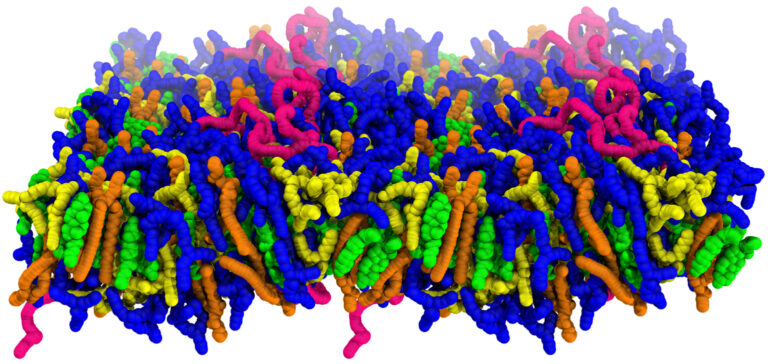 Vaccines and other medicines are often packed in little fat droplets, or lipids. In this form, they are absorbed by cells and release their “cargo” once they are there. The trigger is a change in the pH value in the droplet’s surroundings. Researchers at Friedrich-Alexander-Universität Erlangen-Nürnberg (FAU) have now created a computer simulation of what […]
Fighting hunger with cassava
 Genetically engineered plant variety shows drought resistance and promises greater yields A team led by Friedrich-Alexander-Universität Erlangen-Nürnberg (FAU) has made a significant breakthrough in the fight against global hunger. The researchers have succeeded in genetically modifying the tropical cassava plant (Manihot esculenta) to provide significantly greater yields and also to become more resistant to drought. […]
Perito Moreno Glacier is detaching from its anchor
 Research predicts end of iconic ice dam events One of the most spectacular natural phenomena in the world will most likely no longer be seen in our lifetime: Between 1940 and 2011 the glacier advanced periodically, and when it did, it blocked the Brazo Rico, a side arm of Lago Argentino. This causes the water level in […]
Prize for mathematics: FAU awards Staudt Prize
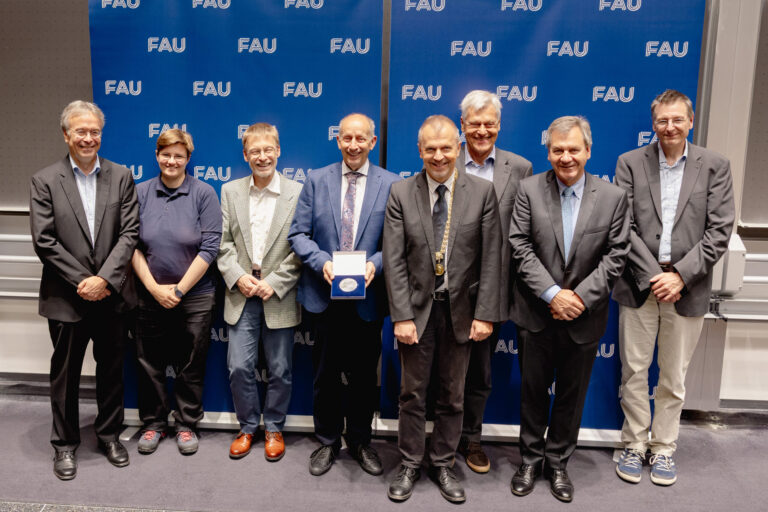 Friedrich-Alexander-Universität Erlangen-Nürnberg (FAU) regularly awards one of the most prestigious German awards in the field of mathematics: The Karl Georg Christian von Staudt Prize. This year, it is being awarded to Prof. Dr. Wolfgang Lück, a mathematician at the University of Bonn, in recognition of his pioneering work in modern algebraic topology and in group […]
New CRC “ChemPrint” consortium aims to revolutionize the manufacturing of semiconductors
 In the new collaborative research center (CRC) 1719 “ChemPrint – the next generation of printed semiconductors: Engineering on the atomic level using molecular surface chemistry”, researchers at FAU are investigating how to improve the manufacturing processes and quality of semiconductors under specific physical and chemical conditions. Semiconductor materials are used mainly in computers and mobile […]
Climate change: It is no longer possible to save the glaciers at the size they are today
 Dr. Christian Sommer from the Institute of Geography at FAU was involved in the first systematic recording of measurement data tracking the dramatic retreat of glaciers Over the last 25 years approximately 39 percent of glacier ice has disappeared: the results of the Glambie study from the European Space Organization ESA are dramatic. For the […]
Quantum mechanics: hypercomplex, or “just” complex?
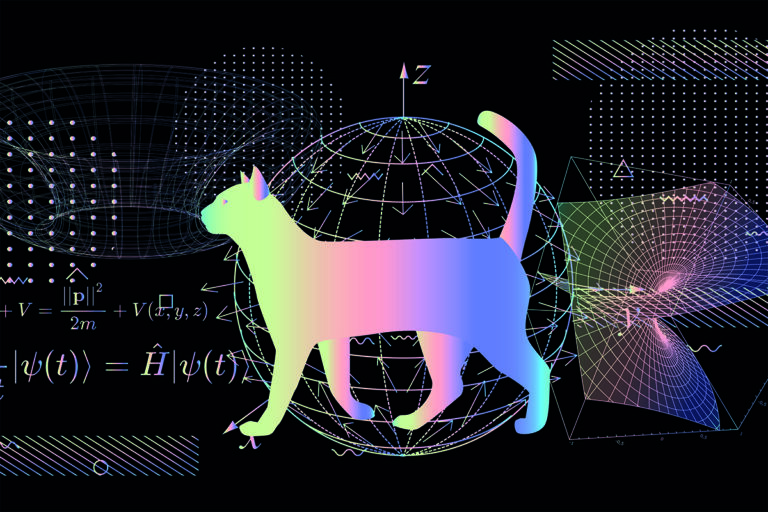 Today, physicists are still asking themselves whether quantum mechanics needs hypercomplex numbers. FAU researchers Ece Ipek Saruhan, Prof. Dr. Joachim von Zanthier and Dr. Marc Oliver Pleinert have been investigating this question in their research. Exactly 100 years ago, Werner Heisenberg, Max Born and Pascual Jordan formulated quantum mechanics and revolutionized our understanding of physics. […]
Project funding: Quantum computers in pocket size
 A quantum computer the size of a smartphone – researchers at Friedrich-Alexander-Universität Erlangen-Nürnberg (FAU) are investigating how this could become reality. Physicist Prof. Dr. Vojislav Krstić and his team of researchers are focusing on developing quantum bits (Qubits) that work on the basis of topological isolators, a class of materials that have increasingly become the […]